Over the years, I have had only two opportunities to visit my home country of India. My latest visit in November 2024 made me think about how India has changed.
You must have felt the same when you only visit your home country after a long time abroad. The changes are more pronounced. This maybe because memories from your last visit are untainted. Sometimes, it feels like they are frozen in some time capsule.
When I arrived in Delhi the first week of November, the city was under emergency owing to widespread smog. Seeing a thick layer of smog blanket the city while the temperature hovered at 35-37 C was surreal.
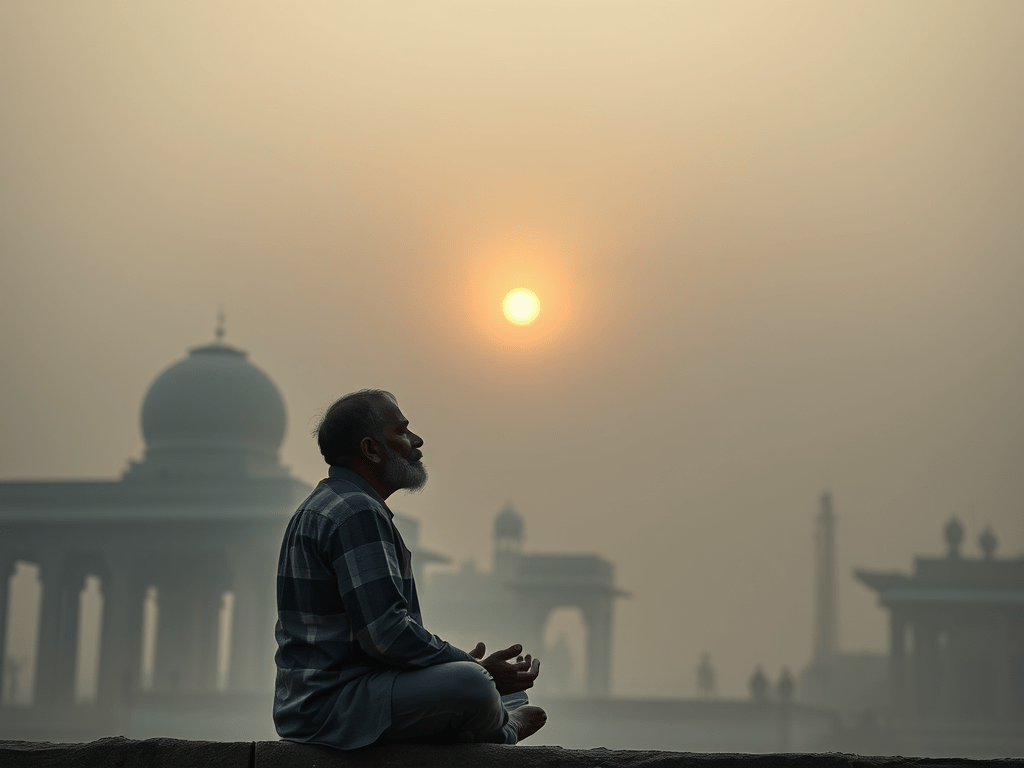
The following day, we ventured out to the hotel’s pool area. I saw this man who seemed to be meditating. He was looking at the Sun across the gray sky. There was this smell of burning rubber wafting in the open. I wondered why anyone would think it’s a good idea to meditate openly. The air quality was borderline toxic. Anyway, we quickly left for our room.
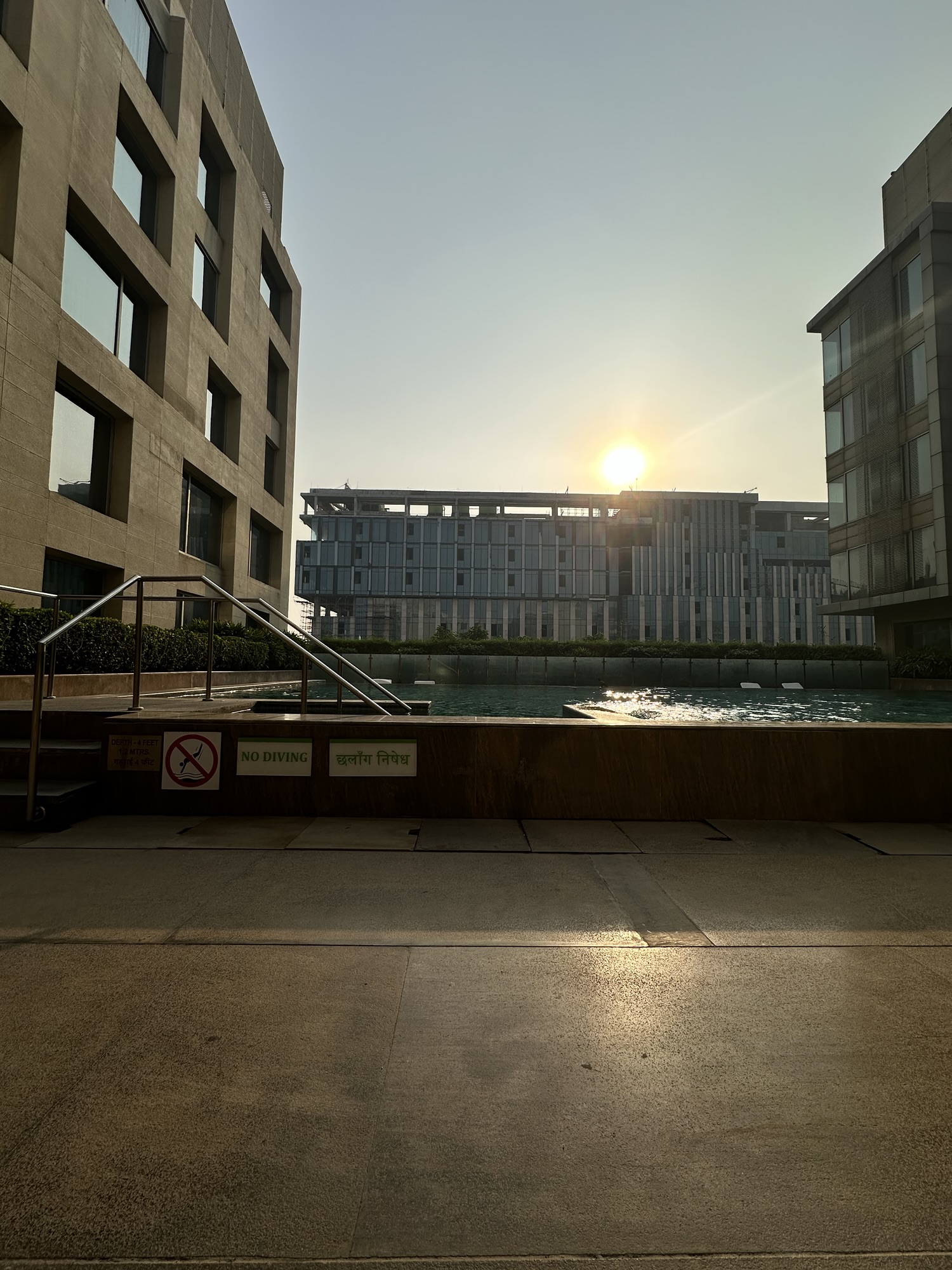
Delhi has become an urban hellscape due to its inability to remediate pollution. The city’s generally falling standards of living, combined with intense summer heat, unpredictable monsoons, and smoggy winters, make you wonder if it is too late.
The trip’s next leg was Ranchi, which was, in many ways, the polar opposite of the apocalyptic scenes from Delhi. The air was fresher, the skies blue, and the temperature was balmy in the 20s. What could you possibly ask more?
The last time I was in Ranchi, I noticed a large increase in the number of men working on ride-hailing applications like Ola and Uber. This time, there was a new entrant in the town, Blinkit. This app promises 10-minute delivery on virtually anything from a throwing axe (hack your neighbours maybe?) to a paper clip.
India constitutionally is a socialist republic.
I forgive you if you were to think they have strong laws protecting labour. Only in a namesake socialist nation will you see an immoral business like Blinkit prosper so spectacularly.
It preys on the non-existent labour protections, the deprivations of the poor, and the gluttony of a tiny class of people with disposable income. Such is the doublespeak that you will see life-sized banners of the Prime Minister celebrating the contributions of the working people while simultaneously breaking their backs.
Widespread crony capitalism, extravagant weddings of the elite, the near-deafening drumming of Hindu nationalism, and worship of a glorious past that never existed.
Maybe all these are necessary to keep the public distracted while the promised future is a mirage.
Some fancy themselves as “industrialists.” In reality, these are chiefs of modern fiefs. They have built capital not because of innovation. It is a direct result of their proximity to the ruling dispensation, akin to what you see in modern Russia.
Finally, we were in Kolkata, the largest city in the eastern part of the country, a cultural hub, an erstwhile capital.
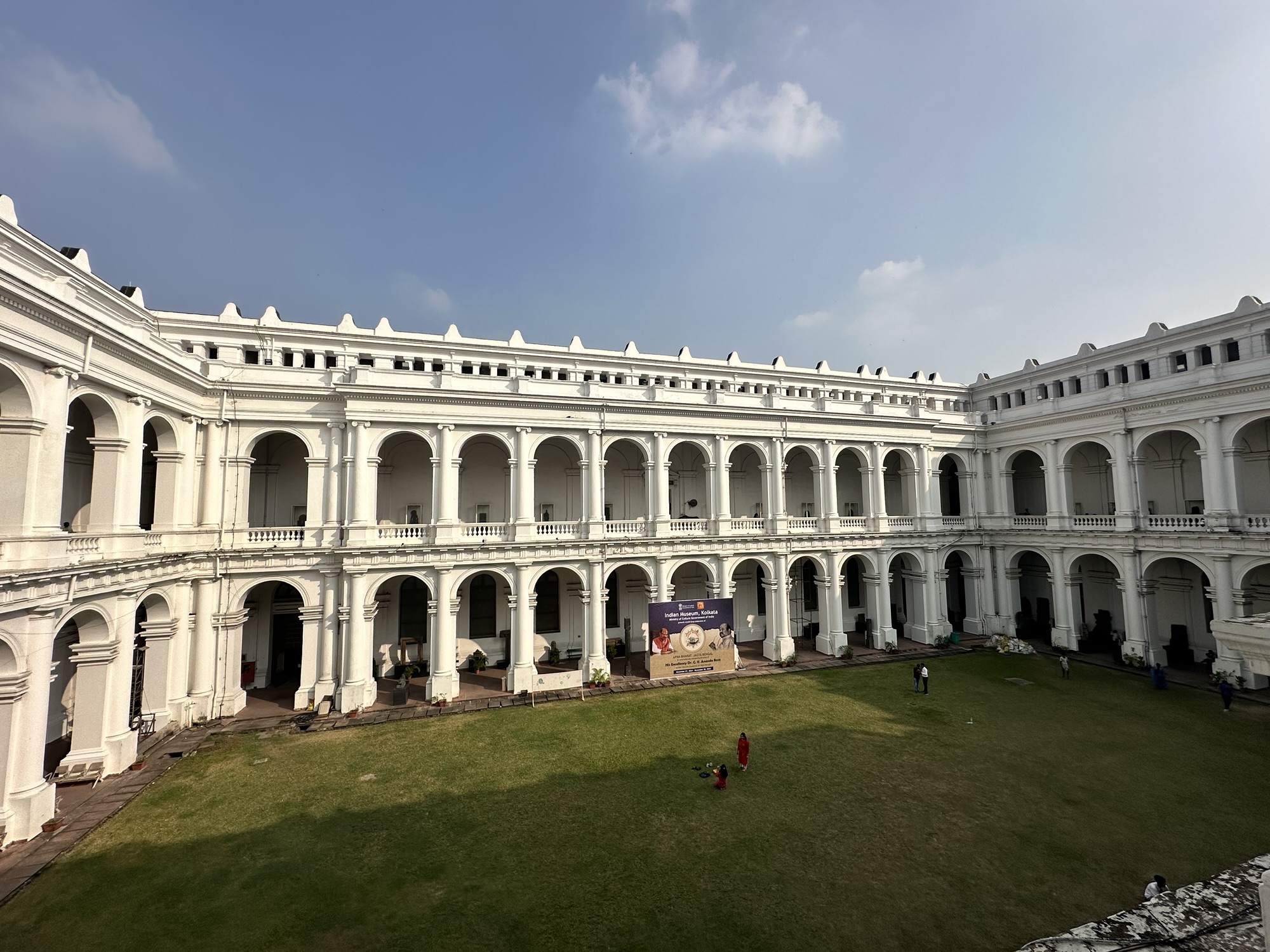
The beautiful Indian Museum in Kolkata is the largest in Asia in terms of the volume of its collections. It has a breathtaking collection from India’s ancient past, Mughal paintings, and fossils.
As if there weren’t enough posters of politicians littering the city, hideous posters of Bengal’s governor stood in the museum. It appears that unless shamelessly shoved, power doesn’t satiate the lust of India’s degenerate rulers.
Why do you need to plaster these eyesores in a beautiful museum?
Such depravity is not possible without people meekly putting up with it.
I wonder why people in India want to cosplay as subjects instead of being rightful citizens?
Except for voting once every five years, Indians rarely involve themselves in democracy. While voting is a fundamental pillar of democracy, informed citizens who know their rights and duties and actively practice them make for a dynamic democracy.
In India, participating in democracy is an afterthought. People vote on their caste and religion. You are dissuaded by people around you who worship personalities. You can bemoan the state and health of democracy, but it reflects the wider society. The rot in Indian democracy reflects the rot in its society.
Apathy, the defeatist mentality, looks for supposed strong leaders. Such leaders believe in self-aggrandizement and are followed by a coterie of elites who benefit at the citizenry’s behest.


Leave a Reply